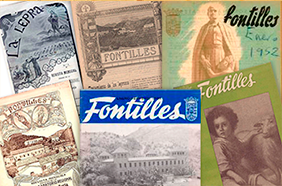
Journals
Originally created to house the two journals published by the Fontilles Sanatorium, this library now opens its doors to publications from other leprosy sanatoriums - places that may seem distant, yet are deeply connected by shared experiences. This expansion begins with two remarkable journals produced at the Agua de Dios Sanatorium in Colombia: El Alfiler and Senda Libre. Where the Fontilles magazines offer a medical and institutional perspective on leprosy, these Colombian publications provide a powerful counterpoint - giving voice to the people who lived in isolation and chronicling their lives from within. This marks the first step toward an international archive of periodicals created in leprosy sanatoriums across the world. All such voices and histories are welcome here.
Fontilles
Published under the name La Lepra, from 1905, and Fontilles, from 1909 to the present day, this monthly journal read by thousands of subscribers publicised the sanatorium's activities and promoted fundraising to keep the institution running. It is a valuable historical document that brings us closer to the sanatorium's daily life and the conceptions underlying the institution's creation and governance during a century.
Revista de Leprología
Since its publication in 1944, the Revista de Leprología journal was the major means of communication of leprosy research in the Spanish language. Fontilles doctors together with Spanish and Latin American leprologists published their research in this journal, disseminating international research on leprosy in Spain and Latin America.
JOURNALS FROM THE AGUA DE DIOS SANATORIUM
El Alfiler and Senda Libre were two magazines written, edited, and printed in the mid-20th century by residents of the Agua de Dios leprosy sanatorium, located along the Bogotá River in Colombia's Cundinamarca department. Created by people confined to the sanatorium, these publications offered a powerful platform for expression, each reflecting a distinct political viewpoint: Senda Libre took a conservative stance, while El Alfiler represented a liberal perspective. Far more than internal newsletters, both magazines carried a strong critical voice. Their pages featured reflections on leprosy and its treatments, sharp political satire and cartoons, and biographical sketches of culturally and politically significant individuals who, like thousands of others from across Colombia and from all walks of life, lived in Agua de Dios - often alongside their families - throughout much of the 20th century*.
* For more information regarding the journals of the Agua de Dios sanatorium, please refer to the article by María Clemencia García Salazar, «The Preservation of Newsprint: Intervention Processes in the Newspaper Collections: El Alfiler and Senda Libre», ConºTacto, No. 16 (May 2021), pp. 31-37.